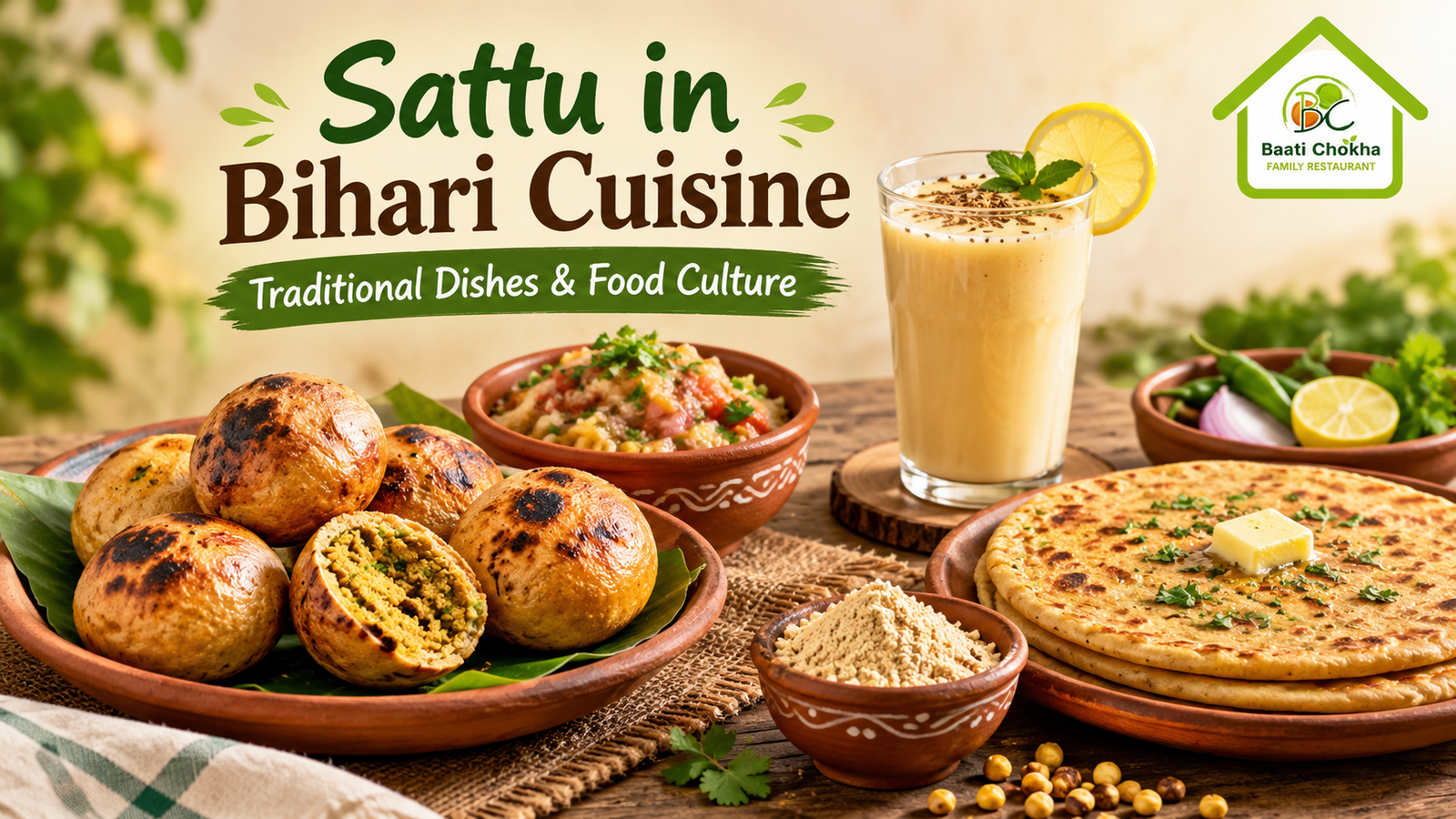
Sattu has a special place in Bihari cuisine. Made from roasted gram, this simple ingredient is used to prepare filling meals, tasty snacks, and refreshing drinks. From sattu paratha to sattu sharbat and sattu-stuffed litti, it brings a familiar taste to many traditional dishes of Bihar.
In Patna and other parts of Bihar, sattu is closely connected with everyday cooking. Families use it in different ways depending on their tastes, recipes and seasonal food habits. Its roasted flavour, simple preparation and versatility make it a popular ingredient in regional kitchens.
Sattu is also an important part of Bihar’s wider food culture. It shows how traditional cooking can turn a few basic ingredients into satisfying and flavourful meals.
In this guide, we will explore sattu in Bihari cuisine, its traditional uses, popular dishes, preparation methods and cultural importance. We will also look at how you can enjoy the flavours of Bihar at Baati Chokha Family Restaurant in Patna.
What Is Sattu in Bihari Cuisine?
Sattu is a flour made from roasted gram, commonly roasted Bengal gram. It has a roasted aroma and a slightly nutty taste. People use it to prepare both savoury and sweet dishes.
Unlike besan, which is generally made from raw or processed chickpeas, sattu is made from roasted gram. This roasting process gives it a different flavour and makes it suitable for several preparations that require little or no further cooking.
Sattu is widely associated with Bihar, where people use it in traditional meals, stuffed breads, snacks and drinks. It is valued for its versatility and its role in everyday cooking.
How Is Traditional Sattu Made?
Traditional sattu preparation starts with roasting gram. The roasted gram is then ground into a fine or slightly coarse flour. The exact texture can vary according to the preparation method.
People use this flour in different ways. They mix it with spices and other ingredients for stuffing, combine it with water to make a drink, or add it to other foods.
Its simple preparation makes sattu a useful ingredient in homes where people want to prepare flavourful food without following complicated recipes.
Why Is Sattu Popular in Bihar?
Sattu is popular because it suits several cooking styles. People can use it for breakfast, snacks, drinks and filling meals. It also works well with common ingredients such as onion, green chilli, lemon, coriander and roasted cumin.
Another reason for its popularity is its connection with local food traditions. Many families have their own ways of seasoning sattu and serving it. These small differences help keep traditional recipes personal and familiar.
Why Is Sattu Important in Bihari Food Culture?
Food in Bihar reflects local ingredients, family traditions and practical cooking methods. Sattu fits naturally into this culture because people can prepare several dishes with the same basic ingredient.
In many households, sattu is used for quick meals and traditional snacks. A spiced sattu filling can go into parathas or litti, while a mixture of sattu and water can become a refreshing drink.
The taste often depends on the ingredients added to it. Mustard oil, chopped onion, green chilli, lemon juice, coriander and pickle can give a simple sattu preparation a distinctive flavour.
Sattu also reflects the importance of seasonal eating in Bihar. During warmer months, people commonly enjoy sattu drinks as a refreshing option. The drink can be adjusted to suit individual preferences, with savoury and sweet versions both being popular.
Sattu in Everyday Bihari Meals
Sattu can appear in different forms throughout the day. Some people enjoy sattu paratha for breakfast, while others prepare a sattu drink between meals. Sattu-stuffed litti is another familiar preparation associated with Bihari cuisine.
The ingredient also gives home cooks room to experiment. A filling can be made more tangy with lemon, more aromatic with roasted cumin, or spicier with green chilli.
These simple variations show why sattu remains relevant in traditional cooking. It is not limited to one recipe or one meal.
Sattu and Seasonal Eating Habits
Sattu sharbat is particularly associated with warm weather. People mix the flour with water and season it according to their taste. A savoury version may include salt, lemon juice, roasted cumin and chopped herbs.
The drink is easy to customise, which makes it suitable for different preferences. However, its nutritional value depends on the ingredients, serving size and the rest of a person’s diet.
What Are the Most Popular Traditional Sattu Dishes?
Sattu is used in several well-known Bihari preparations. Each dish combines its roasted flavour with different ingredients and cooking methods.
1. Sattu Paratha
Sattu paratha is one of the popular ways to enjoy sattu as part of a meal. It consists of wheat dough filled with a seasoned mixture of sattu and spices. The stuffed dough is rolled out and cooked on a tawa until the outside develops a light golden colour.
The filling commonly includes chopped onion, green chilli, coriander, salt, lemon juice and mustard oil. Some recipes also use pickle masala or other spices to create a stronger flavour.
Sattu paratha is often served with curd, pickle, chutney or chokha. The combination of crisp bread and a flavourful filling makes it suitable for breakfast, lunch or a filling snack.
For people exploring traditional Bihari food, sattu paratha offers a simple introduction to the ingredient.
2. Litti Stuffed with Sattu
Litti chokha is one of the best-known dishes associated with Bihar. Traditional litti uses wheat dough shaped around a seasoned sattu filling. The stuffed dough balls are baked or roasted until cooked, then served with chokha and other accompaniments.
Chokha is generally made from mashed vegetables such as roasted brinjal, potato or tomato. The vegetables are mixed with ingredients such as onion, green chilli, mustard oil and spices, depending on the recipe.
The combination works because each part brings a different texture and flavour. The litti has a roasted outer layer, the sattu filling provides a savoury centre, and chokha adds a soft, smoky and tangy element.
You can read more about this traditional combination in our guide to litti chokha in Bihar.
3. Sattu Kachori and Other Snacks
Some regional and household recipes use seasoned sattu as a filling for fried breads and snacks. Sattu kachori is one example. The filling may contain spices, onion and other ingredients that create a savoury taste.
Preparation methods vary between households and regions. Some cooks prefer a simple seasoning, while others add more spices for a stronger flavour.
Sattu can also be used in small savoury preparations served with chutney or pickles. These variations show how the ingredient can adapt to different eating occasions.
4. Simple Sattu Preparations for Everyday Meals
Not every sattu dish requires a lengthy cooking process. Some people mix sattu with chopped onion, green chilli, lemon juice, salt and mustard oil to make a quick savoury preparation.
This mixture can be eaten according to local preferences or used as a filling for breads. The ingredients can be adjusted to make it mild, spicy or tangy.
These everyday preparations highlight the practical side of Bihari cooking. A familiar ingredient can form the base of several dishes without requiring an elaborate recipe.
How Is Traditional Sattu Drink Prepared in Bihar?
Sattu drink, often called sattu sharbat, is another popular way to use roasted gram flour. It is commonly prepared by mixing sattu with water and adding sweet or savoury ingredients.
The drink’s consistency can vary. Some people prefer it thin and refreshing, while others make it thicker.
Savoury Sattu Sharbat
Savoury sattu sharbat combines sattu with water, salt, lemon juice and roasted cumin. Some recipes also include chopped onion, green chilli, coriander or mint.
To prepare a simple version:
- Add sattu to a glass or bowl.
- Pour in a little water and mix until smooth.
- Add more water to reach your preferred consistency.
- Season with salt, roasted cumin and lemon juice.
- Add chopped herbs or green chilli if desired.
Mix the drink well before serving. This helps distribute the flour and seasonings evenly.
Sweet Sattu Drink
A sweet version uses sattu, water and a sweetener such as sugar or jaggery. The mixture can be adjusted according to taste and served chilled.
Some families prefer the savoury version, while others enjoy the sweetness of jaggery. Both preparations demonstrate the flexibility of sattu in traditional drinks.
When Do People Commonly Drink Sattu Sharbat?
People often enjoy sattu sharbat during warm weather. Its ingredients are simple, and the flavour can be adjusted to suit individual preferences.
Sattu is also used in drinks because it has a distinct roasted taste that works well with both sweet and savoury ingredients. For more information about balanced eating and nutrition, readers can consult the Indian Council of Medical Research’s nutrition resources.
What Makes Sattu a Distinctive Traditional Food?
Sattu stands out because it can be used in different forms. It works as a filling, a flour-based ingredient and the base of a drink. This variety gives it an important place in traditional Bihari cooking.
Its roasted flavour also pairs well with familiar Indian ingredients. Lemon adds tanginess, green chilli brings heat, and roasted cumin provides a warm, earthy taste.
Nutrients Found in Roasted Gram Sattu
Sattu made from roasted gram can provide protein, carbohydrates and dietary fibre. The exact nutritional content depends on the type of gram, the product and the preparation method.
Adding sattu to a meal does not automatically make the entire meal nutritionally balanced. The other ingredients, portion size and cooking method also matter.
For reliable information about food and nutrition, refer to the ICMR nutrition resources rather than relying on broad claims made in food blogs.
How Sattu Fits into a Balanced Diet
Sattu can form part of a varied diet. People may enjoy it in stuffed breads, drinks or other preparations alongside vegetables, curd and other foods.
The final nutritional profile changes with the recipe. A savoury drink, a sweet drink and a paratha cooked with oil will not have the same nutritional composition.
The best approach is to enjoy traditional dishes in suitable portions and consider the overall variety of foods eaten throughout the day.
How Does Sattu Reflect Bihar’s Food Heritage?
Bihari cuisine includes many dishes that rely on familiar ingredients and traditional preparation methods. Sattu is one such ingredient. Its use in stuffed breads, litti and drinks connects everyday meals with regional food traditions.
Recipes can vary from one family to another. Some people prefer a strong mustard oil flavour, while others use more lemon juice, coriander or spices. These differences give traditional dishes their individual character.
Sattu also shows how one ingredient can serve different purposes in the kitchen. A family can use it to make a quick drink, prepare a filling for bread or create a traditional meal.
Sattu in Traditional and Modern Bihari Cooking
Traditional ingredients continue to feature in contemporary food choices. Sattu dishes can be prepared at home, served in local eateries or included in restaurant menus.
People who grew up eating these foods may associate them with family meals and familiar flavours. Visitors can also use them as a starting point for exploring Bihar’s culinary traditions.
Exploring Bihari Food in Patna
Patna offers opportunities to explore regional dishes, from litti chokha to stuffed parathas and traditional thalis. For anyone interested in Bihari food, trying different preparations can reveal how ingredients and seasonings shape local flavours.
If you enjoy reading about regional food, explore our guide to traditional family dining in Patna. It can help you learn more about dining options for families and groups.
Where Can You Enjoy Traditional Bihari Food in Patna?
Reading about Bihari cuisine is one way to learn about its ingredients and traditions. Trying regional dishes is another way to appreciate their flavours.
Baati Chokha Family Restaurant serves traditional Bihari-style food in Patna. Its website features dishes and meal options that include baati chokha and a sattu paratha combo.
If you want to explore more regional flavours, visit the Baati Chokha Family Restaurant website to check the available menu and restaurant information before planning your visit.
You can also read our guide to dinner places in Patna for more ideas when planning a meal with family or friends.
Frequently Asked Questions About Sattu in Bihari Cuisine
What Is Sattu Called in English?
Sattu is commonly described in English as roasted gram flour or roasted chickpea flour, depending on the gram used. It is made by roasting gram and grinding it into flour.
Which Sattu Dishes Are Popular in Bihar?
Popular preparations include sattu paratha, sattu-stuffed litti, savoury sattu sharbat and sweet sattu drinks. Other snacks and stuffed breads also use sattu, with recipes varying between households.
Is Sattu Used in Both Food and Drinks?
Yes. Sattu is used as a filling in dishes such as paratha and litti. People also mix it with water and seasonings to make sweet or savoury drinks.
What Is the Difference Between Sattu and Besan?
Sattu is generally made from roasted gram, while besan is usually made from raw or processed chickpeas. Their flavour, preparation and common uses differ, although both are used in Indian cooking.
Is Sattu a Traditional Bihari Breakfast Ingredient?
Yes. Sattu can be used to prepare breakfast dishes such as sattu paratha. Some people also enjoy sattu drinks or other quick preparations at different times of the day.
Where Can I Try Traditional Bihari Food in Patna?
You can explore regional food options in Patna, including Baati Chokha Family Restaurant. Check its official website for current menu details, location and other information before visiting.
Key Takeaways: The Role of Sattu in Bihari Cuisine
Sattu is much more than a flour used in a single recipe. It is a versatile ingredient that features in traditional Bihari dishes, stuffed breads and refreshing drinks.
From sattu paratha and litti to sweet and savoury sattu sharbat, its different uses reflect the variety of Bihar’s food culture. Each preparation brings its own flavour and character.
If you want to explore more of this regional cuisine, discover traditional dishes and dining options through Baati Chokha Family Restaurant in Patna. A closer look at local food is a simple way to appreciate the ingredients and cooking traditions that make Bihari cuisine distinctive.