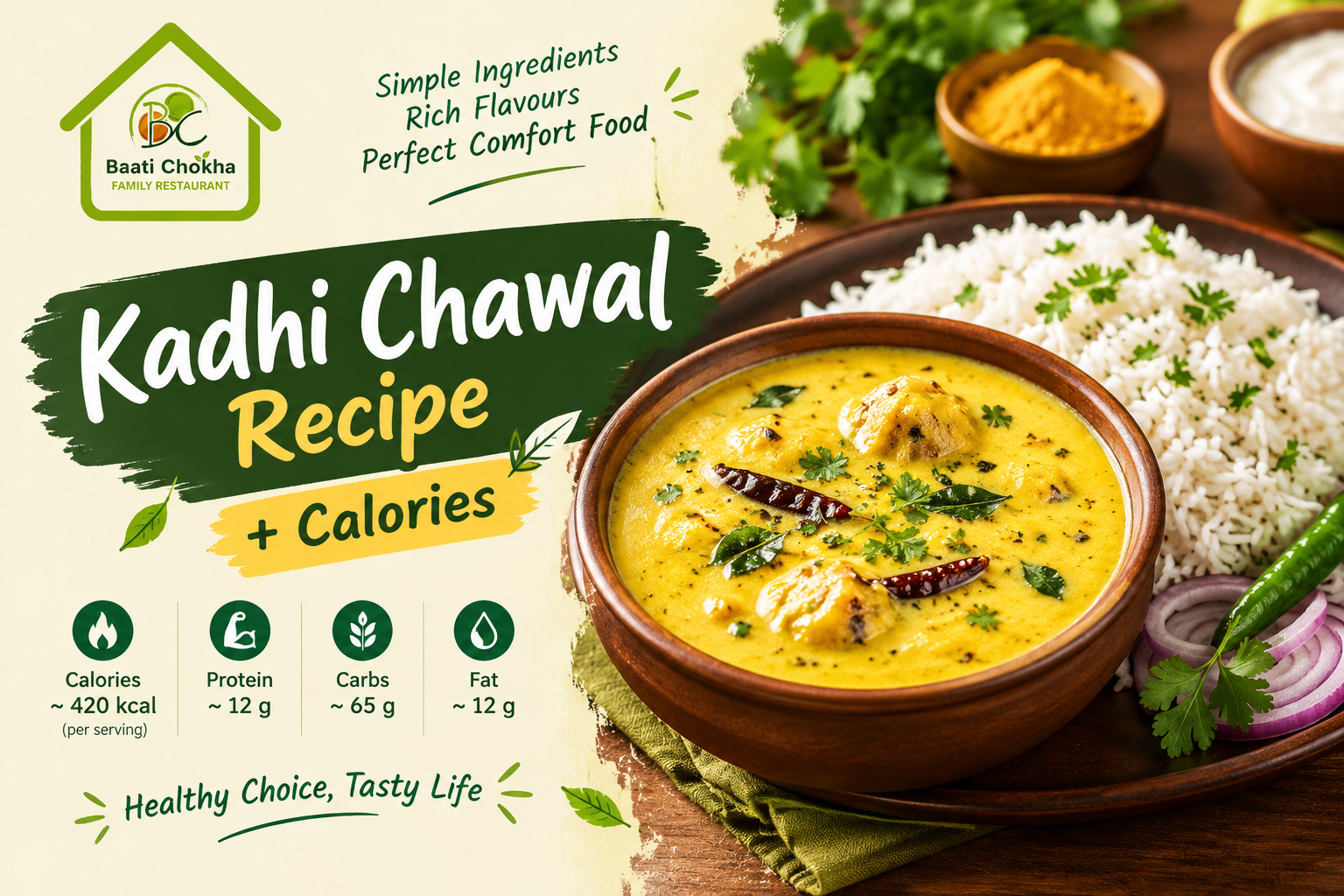
Few meals feel as comforting as a steaming plate of kadhi chawal (कढ़ी चावल). Tangy yogurt gravy thickened with besan, finished with a sizzling tadka and poured over fluffy rice: it’s the kind of lunch that makes a Sunday feel like a Sunday. In many North Indian homes, kadhi chawal is also the meal people ask for when they’re tired, unwell or homesick.
If you’ve struggled with kadhi that turned lumpy, split or tasted raw, this guide will fix that. You’ll get a tested kadhi chawal recipe with soft pakoras, honest numbers on the calories in kadhi chawal, tips to make it lighter, and answers to the questions readers ask most.
In this guide:
- What kadhi chawal is, and its regional styles
- Ingredients and step-by-step recipe
- Tips for perfect kadhi every time
- Calories in kadhi chawal, with a component-wise breakdown
- Healthy swaps, storage tips and FAQs
What Is Kadhi Chawal?
Kadhi chawal is a classic Indian comfort dish made of kadhi, a gravy of curd (dahi) and besan (gram flour), served with steamed rice. The mixture is simmered slowly until the besan loses its raw flavour and the gravy turns smooth, mildly sour and slightly thick. A tadka of ghee, cumin, dried red chillies and hing goes on top.
Most versions are served with pakoras, small besan fritters that soften in the gravy and soak up all the flavour. Some homes make kadhi without them, especially for everyday meals or when someone wants a lighter plate.
Popular Regional Styles of Kadhi
Kadhi changes from state to state, and almost every family has its own rules.
- Punjabi kadhi: Thick and robust, with onion pakoras and a spicy tadka. This is the version most people mean when they say kadhi chawal, and it’s what we make below.
- Rajasthani kadhi: Often made without onion or garlic, tangy and sometimes thinner. It’s usually spiced with hing, red chilli and cloves.
- Gujarati kadhi: Thin, lightly sweet from a bit of jaggery or sugar, and tempered with mustard seeds, curry leaves and cloves. Usually no pakoras.
- Sindhi kadhi: Made with besan roasted in oil and vegetables like drumstick, okra and potato, with a tamarind-based tang instead of curd.
This recipe follows the Punjabi style, which is the most popular choice for kadhi chawal across North India.
Ingredients for Kadhi Chawal
Prep time: 15 minutes | Cook time: 40 minutes | Serves: 4
For the Pakoras
- ¾ cup besan (gram flour)
- 1 medium onion, thinly sliced
- 1 green chilli, finely chopped
- ½ tsp ajwain (carom seeds)
- ½ tsp red chilli powder
- ¼ tsp turmeric powder
- Salt to taste
- Oil for deep frying
For the Kadhi
- 1 cup sour curd (dahi), whisked
- ½ cup besan
- ½ tsp turmeric powder
- ½ tsp red chilli powder
- 3½ to 4 cups water
- Salt to taste
For the Tadka
- 1½ tbsp ghee or oil
- 1 tsp jeera (cumin seeds)
- ¼ tsp methi dana (fenugreek seeds)
- 2 dried red chillies
- ¼ tsp hing (asafoetida)
- 1 tsp ginger-garlic paste (optional)
- 1 tsp Kashmiri red chilli powder
For the Rice
- 1 cup basmati rice, rinsed and cooked until fluffy
Why Sour Curd Matters
The most important ingredient in kadhi is khatta dahi, or sour curd. Fresh, sweet curd gives a flat, bland gravy. Curd that has been sitting in the fridge for two to three days has the tang that defines good kadhi. If you only have fresh curd, leave it out on the counter for 6 to 8 hours (in warm weather) before using it, or add a squeeze of lemon juice at the end.
How to Make Kadhi Chawal: Step-by-Step Recipe
Step 1: Make the Pakoras
Mix the besan, sliced onion, green chilli, ajwain, chilli powder, turmeric and salt in a bowl. Add water a spoonful at a time until you get a thick, dropping-consistency batter. Whisk it vigorously for a minute or two. This incorporates air and makes soft pakoras.
Heat oil in a kadhai on medium heat. Drop small spoonfuls of batter into the oil and fry, turning occasionally, until golden and cooked through. Drain on a paper towel and set aside.
Step 2: Prepare the Kadhi Base
In a large bowl, whisk the sour curd, ½ cup besan, turmeric, red chilli powder and salt until perfectly smooth. Add the water gradually while whisking so no lumps form. A hand whisk or a blender jar works well. Do not skip this step. Lumps at this stage stay in the final kadhi.
Step 3: Cook the Kadhi
Pour the mixture into a heavy-bottomed pot and place it on medium heat. Stir continuously until it comes to a boil. This stops the curd from splitting. Once it boils, lower the heat and simmer for 25 to 30 minutes, stirring every few minutes and scraping the bottom.
The kadhi is ready when it has thickened to a pouring consistency, the raw besan smell has gone, and a thin layer of oil starts to rise to the surface. If it gets too thick, add a little hot water.
Step 4: Add the Pakoras
Drop the fried pakoras into the simmering kadhi and cook for 5 minutes. They will puff slightly and turn soft. Switch off the heat.
Step 5: Prepare the Tadka
Heat ghee in a small pan. Add jeera and let it crackle, then add methi dana and dried red chillies. Add the hing, then the ginger-garlic paste if using, and finally the Kashmiri red chilli powder. Take the pan off the heat quickly so the chilli powder doesn’t burn and turn bitter. Pour the sizzling tadka over the kadhi.
Step 6: Serve
Serve the kadhi hot over a bowl of steamed basmati rice. Papad, mango or lemon pickle and sliced raw onion on the side complete the plate.
Tips for Perfect Kadhi Every Time
Kadhi looks simple, but small mistakes can ruin it. These tips come from common problems readers face.
- Whisk the curd and besan well before heating. Lumps formed in cold liquid are much easier to fix than lumps in a hot pot.
- Use a heavy-bottomed pot. Besan sticks and scorches easily on thin vessels.
- Stir until the first boil. After that, the gravy is stable and you can stir occasionally.
- Keep the heat on medium, then low. High heat can make curd split.
- Don’t rush the simmer. Kadhi needs 25 to 30 minutes. Under-cooked kadhi tastes floury.
- Go easy on methi dana. A pinch adds depth, but too much turns the kadhi bitter.
- Make the pakoras with whisked batter. Whisking gives soft pakoras that absorb the gravy well.
- Add the tadka at the end. A fresh tadka lifts the whole dish.
Variations You Can Try
- Kadhi with vegetables: Add boiled potato, lauki (bottle gourd) or spinach pakoras.
- Palak pakora kadhi: Replace onion pakoras with chopped spinach fritters for extra iron.
- No-onion, no-garlic kadhi: Skip the onion in the pakoras and the ginger-garlic paste in the tadka. This is useful for fasting days or festivals.
- Plain kadhi: Leave out the pakoras entirely for a lighter meal.
- Sweet-and-sour kadhi: Add a teaspoon of jaggery for a Gujarati-style balance.
- Pressure cooker kadhi: Cook the base for 3 to 4 whistles on medium heat, then temper and add pakoras. It’s faster, though the flavour is slightly less developed than slow simmering.
What to Serve with Kadhi Chawal
Kadhi chawal is a complete meal on its own, but a few sides make it better:
- Crispy papad (roasted or fried)
- Mango, lemon or mixed vegetable pickle
- Sliced onions with lemon
- Aloo jeera or bhindi fry for a heavier thali
- Cucumber or tomato kachumber salad
If you want to explore more comfort food, try our litti chokha recipe or dal tadka recipe.
Calories in Kadhi Chawal
Now to what many readers are searching for: how many calories are in kadhi chawal? The honest answer is that it depends on how much oil is used for frying pakoras, how much ghee goes into the tadka, whether the curd is full-fat, and how much rice is on your plate.
The table below shows approximate values for a typical home-cooked portion.
| Component | Portion | Approx. calories |
| Kadhi (without pakoras) | 1 cup (~200 g) | 120 to 160 kcal |
| Kadhi pakoras | 4 medium | 120 to 160 kcal |
| Cooked white rice | 1 cup (~160 g) | 200 to 210 kcal |
| Tadka (ghee) | ~1 tsp per serving | 40 kcal |
| Full plate: kadhi + pakoras + rice | 1 plate | ~450 to 550 kcal |
Calories in kadhi chawal without pakoras: about 350 to 400 kcal per plate.
These are estimates. Restaurant kadhi chawal is often higher, between 600 and 750 kcal, because of extra oil, larger rice portions and heavier tadka.
Nutritional Profile
Beyond calories, kadhi chawal offers:
- Carbohydrates: mainly from rice and besan. A typical plate has 60 to 75 g.
- Protein: around 10 to 14 g from besan and curd.
- Fat: 12 to 20 g, depending on pakoras and ghee.
- Probiotics and calcium: from the curd, although cooking reduces live cultures.
- Fibre: modest. You can boost it with vegetables and whole-grain rice.
What Increases the Calories?
- Deep-fried pakoras, especially large or oil-soaked ones
- Extra ghee in the tadka
- Full-fat curd or malai in the gravy
- Large rice portions (two cups of rice adds over 400 kcal)
- Sides like fried papad
How to Make Kadhi Chawal Lighter
You don’t have to give up this comfort meal. A few swaps help:
- Air-fry or steam the pakoras, or leave them out.
- Use low-fat or toned-milk curd.
- Cut the tadka to 1 tsp ghee per batch of four servings.
- Swap white rice for brown rice, red rice or millets like jowar and bajra for more fibre.
- Reduce the rice to ¾ cup and add a bowl of salad or sabzi.
- Add vegetables such as lauki, spinach or carrot to the kadhi.
- Choose roasted papad instead of fried.
With these changes, a plate can come down to roughly 300 to 350 kcal.
Is Kadhi Chawal Healthy?
In moderation, yes. Kadhi chawal is a balanced home-cooked meal. It combines carbohydrates, some protein and fermented dairy, and it’s easy to digest for most people. Many families serve it when someone has a mild stomach upset because it feels light and soothing.
The caveats are the fried pakoras, heavy ghee and large rice portions. People managing diabetes, cholesterol or weight should watch portion size and prefer brown rice or millets. If you have a medical condition, it’s best to check with your doctor or dietitian about what fits your plan.
How to Store and Reheat Kadhi
- Refrigerate leftover kadhi in an airtight container for up to 2 days.
- Keep pakoras separate if you want them to stay firm, or let them soak for a softer texture.
- Reheat on low heat with a splash of water, stirring gently. Fast reheating on high heat can split the gravy.
- Add a fresh tadka after reheating to revive the flavour.
- Freezing isn’t recommended. Curd-based gravies tend to separate once thawed.
Frequently Asked Questions About Kadhi Chawal
How many calories are in one plate of kadhi chawal?
A typical home-cooked plate with pakoras has about 450 to 550 kcal. Without pakoras it is about 350 to 400 kcal.
Can I eat kadhi chawal for weight loss?
You can fit it into a weight-loss plan if you control the rice portion, skip fried pakoras and keep the tadka light. Pair it with salad or vegetables to stay full.
Why does my kadhi curdle or split?
Common causes are unwhisked curd, high heat and not stirring until the first boil. Whisk the curd and besan to a smooth paste, use medium heat and stir constantly at the start.
Why does my kadhi taste raw or floury?
It hasn’t simmered long enough. Cook the kadhi for a full 25 to 30 minutes so the besan cooks through.
Why is my kadhi bitter?
Too much methi dana, or a burnt tadka. Use a small pinch of fenugreek and remove the pan from the heat as soon as the chilli powder goes in.
Can I make kadhi without pakoras?
Yes. Plain kadhi is very popular and lower in calories.
Can I use fresh curd?
You can, but the flavour will be mild. Sour curd gives the traditional tang. A little lemon juice can help if your curd is fresh.
What rice goes best with kadhi?
Plain steamed basmati is the classic. Jeera rice also works well.
Is kadhi chawal good for the stomach?
Many people find it easy to digest. Still, if you have acidity or lactose intolerance, listen to your body and adjust the portion.
Can I make kadhi in advance?
Yes. Make the base up to a day ahead, refrigerate it, and reheat gently with a fresh tadka before serving.
Final Thoughts
Kadhi chawal is simple, affordable and deeply satisfying. Once you get the basics right (sour curd, smooth whisking, patient simmering and a fresh tadka), it works every time. You can make it your own with extra pakoras, vegetables or a lighter tadka, depending on what your family likes.
Now that you know the calories in kadhi chawal and how to tweak them, you can enjoy this classic without guilt. Try the recipe this weekend, and let us know in the comments how it turned out. If you liked this one, explore more homestyle recipes on Baati Chokha.