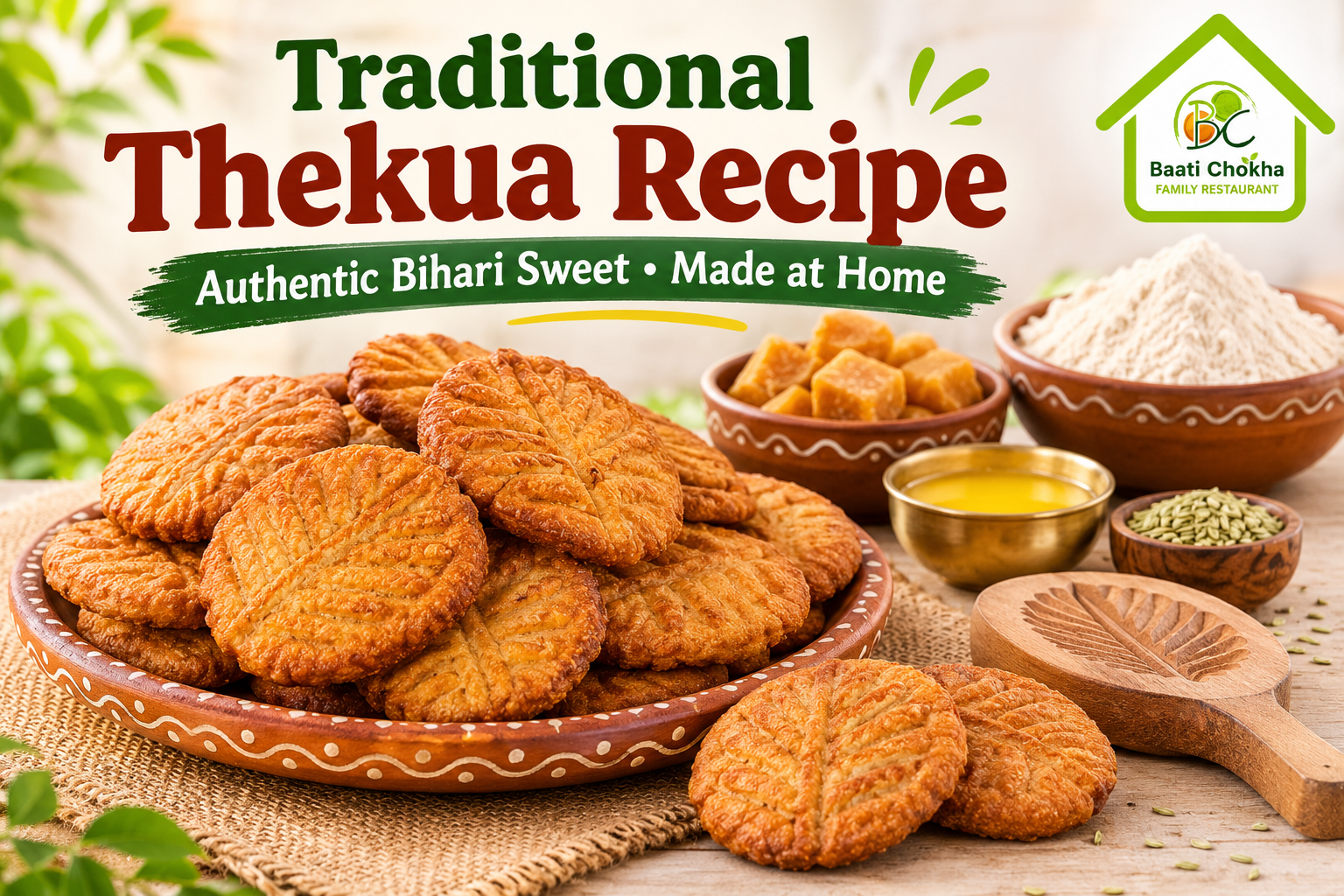
Thekua is one of the most loved traditional sweets of Bihar. It has a crispy texture, a rich jaggery flavour and a delicious aroma of ghee and fennel seeds. People prepare this sweet during Chhath Puja and other special occasions. Many families in Patna and different parts of Bihar follow their own traditional methods to make Thekua at home.
The best part about Thekua is its simple preparation. You do not need expensive ingredients or special cooking equipment. Wheat flour, jaggery, ghee and a few basic kitchen ingredients are enough to prepare this delicious Bihari sweet.
If you want to learn how to make an authentic Thekua at home, this traditional Thekua Recipe will guide you through every step. From choosing the right ingredients to frying Thekua until golden brown, you will learn everything you need for a crispy and tasty result.
What Is Thekua? Understanding Bihar’s Traditional Sweet
Thekua is a traditional deep-fried sweet made mainly with wheat flour, jaggery or sugar, ghee and aromatic ingredients. It is popular in Bihar, Jharkhand, eastern Uttar Pradesh and nearby regions.
People usually shape Thekua using a traditional wooden mould. These moulds create beautiful patterns on the surface and give the sweet its familiar appearance.
Unlike many Indian sweets that use milk, khoya or sugar syrup, traditional Bihari Thekua uses a simple dough. Jaggery adds natural sweetness, while ghee gives it a rich taste and a crumbly texture.
Why Is Thekua Popular During Chhath Puja?
Thekua has a special place in Chhath Puja celebrations. Families prepare it as an important prasad for offering to Surya Dev and Chhathi Maiya.
Chhath Puja is a major festival in Bihar. Devotees follow traditional rituals and prepare different food offerings with care and cleanliness. Thekua is one of the familiar items included in these offerings.
You can read more about the festival on the official Bihar Tourism website.
What Makes Traditional Thekua Different from Other Indian Sweets?
Traditional Thekua has a unique combination of taste and texture. Its main features include:
- A crispy outer layer.
- A rich flavour from jaggery.
- A pleasant aroma of fennel and cardamom.
- A firm texture that does not require refrigeration immediately after proper preparation.
- A traditional design created with wooden moulds.
These qualities make Thekua different from many other Indian sweets.
Traditional Thekua Ingredients You Need
The quality of ingredients plays an important role in making delicious Thekua. Fresh wheat flour, good-quality jaggery and pure ghee help create the traditional flavour.
Here are the ingredients required for approximately 15–20 medium-sized Thekua pieces.
| Ingredient | Quantity |
| Wheat flour (Atta) | 2 cups |
| Jaggery (Gur) | ¾ cup |
| Ghee | 4 tablespoons |
| Fennel seeds (Saunf) | 1 teaspoon |
| Cardamom powder | ½ teaspoon |
| Grated coconut | 2 tablespoons (optional) |
| Water | As required |
| Oil or ghee | For deep frying |
Why Are Wheat Flour and Jaggery Important?
Wheat flour forms the base of the Thekua dough. It gives the sweet its firm structure and helps create a crispy texture after frying.
Jaggery provides sweetness and a traditional flavour. It also gives Thekua its characteristic golden-brown colour.
Ghee adds richness and helps make the dough crumbly. Fennel seeds and cardamom improve the aroma and taste.
Cooking tip: Avoid adding too much water while preparing the dough. A firm dough is important for making crispy Thekua.
Traditional Thekua Recipe: Step-by-Step Preparation
Now let’s understand the complete Thekua preparation method. Follow these simple steps to make authentic Bihari Thekua in your kitchen.
Step 1: Prepare the Jaggery Syrup
Break the jaggery into small pieces and place it in a saucepan. Add a little water and heat it on a low flame.
Stir until the jaggery dissolves completely. Strain the mixture to remove any impurities. Allow it to cool until it becomes warm rather than hot.
The syrup should be smooth and free from solid jaggery pieces. You do not need to make a thick one-string sugar syrup for this recipe.
Step 2: Mix Wheat Flour and Other Ingredients
Take a large mixing bowl and add wheat flour.
Now add ghee, fennel seeds, cardamom powder and grated coconut. Mix everything properly with your hands.
Rub the ghee into the flour until the mixture looks slightly crumbly. This step helps create a good texture in the finished Thekua.
Step 3: Prepare a Firm Thekua Dough
Slowly add the warm jaggery syrup to the flour mixture.
Mix everything gently and bring the mixture together to form a firm dough. Add a little water only if needed.
Do not knead the dough like regular roti dough. Over-kneading can make Thekua hard and dense.
Cover the dough and let it rest for around 10–15 minutes.
Step 4: Shape Thekua Using a Traditional Mould
Divide the dough into small equal portions. Roll each portion into a ball and flatten it gently.
Use a traditional wooden Thekua mould to create patterns on the surface. If you do not have a mould, you can use a fork or your fingers to make simple designs.
Make sure every piece has a similar thickness. This helps the Thekua cook evenly during frying.
Step 5: Fry Thekua Until Golden Brown
Heat oil or ghee in a deep kadai on a low-to-medium flame.
Carefully place a few Thekua pieces into the hot oil. Do not overcrowd the kadai because the pieces need enough space to cook properly.
Fry them slowly and turn them occasionally. Cook until both sides become golden brown.
Remove the Thekua and place them on a plate lined with kitchen paper.
Important tip: Do not fry Thekua on very high heat. The outside may become dark while the inside remains uncooked. Slow frying helps create an evenly cooked and crispy sweet.
Step 6: Cool and Store the Homemade Thekua
Allow the fried Thekua to cool completely before storing them.
Place them in a clean, dry and airtight container. Avoid closing the container while the Thekua are still warm because trapped moisture can affect their crispiness.
Your homemade Bihari Thekua is now ready to serve with tea or enjoy during festive celebrations.
How to Make Crispy Thekua at Home
Many people want to make Thekua that stays crispy even after cooling. A few simple cooking tips can help you achieve the right texture.
Maintain the Right Dough Consistency
Always prepare a firm dough. A soft and sticky dough can make Thekua absorb more oil and lose its traditional texture.
Use the Correct Oil Temperature
Keep the flame low to medium while frying. Thekua needs enough time to cook from inside. Avoid rushing the process by increasing the heat.
Add the Right Amount of Ghee
Ghee helps create a rich flavour and crumbly texture. Adding too little ghee can make the finished sweet harder than expected.
Avoid Overcrowding the Kadai
Fry small batches at a time. This helps maintain a more consistent oil temperature and allows every piece to cook evenly.
Popular Variations of Traditional Bihari Thekua
Different families prepare Thekua using slightly different ingredients and methods. Here are some popular variations.
1. Gur Thekua Recipe
Gur Thekua is one of the most popular traditional versions. It uses jaggery instead of refined sugar.
Jaggery gives the sweet a rich flavour and a natural brown colour. If you enjoy traditional Bihari sweets, this version is a great choice.
2. Coconut Thekua
Coconut Thekua includes grated coconut in the dough. Coconut adds a pleasant aroma and a slightly different texture.
You can use fresh or properly dried grated coconut, depending on your preferred taste.
3. Cardamom and Fennel Thekua
This variation focuses on aromatic ingredients. Cardamom adds a warm fragrance, while fennel gives a refreshing flavour.
Both ingredients work well with wheat flour and jaggery.
4. Sugar Thekua
Some families prefer using sugar instead of jaggery. The preparation method remains almost the same, but the flavour and colour may differ.
For a traditional Gur Thekua Recipe, jaggery is the preferred choice.
Common Mistakes to Avoid When Making Thekua
Even a simple Homemade Thekua Recipe requires attention to a few details. Avoid these common mistakes:
- Using too much water: Excess water can make the dough soft and affect the final texture.
- Over-kneading the dough: This can make Thekua dense and hard.
- Frying on high heat: High heat can burn the outside before the inside cooks properly.
- Making uneven shapes: Different thicknesses can cause uneven frying.
- Storing warm Thekua: Moisture inside the container can reduce crispiness.
- Using poor-quality jaggery: Impurities or an unpleasant taste in jaggery can affect the final result.
Following the correct Thekua Preparation Method will help you achieve a better taste and texture.
How to Store Homemade Thekua and Keep It Crispy
Proper storage helps maintain the taste and texture of homemade Thekua.
Follow these simple storage tips:
- Allow every piece to cool completely after frying.
- Use a clean and completely dry airtight container.
- Keep the container in a cool, dry place.
- Avoid direct sunlight and moisture.
- Always use a clean, dry spoon or hand when removing Thekua.
When prepared and stored properly, dry Thekua can often remain enjoyable for around one to two weeks. The actual shelf life depends on the moisture content, ingredients, cooking method and storage conditions.
For food hygiene guidance, refer to the Food Safety and Standards Authority of India (FSSAI).
Why Thekua Holds a Special Place in Bihari Traditional Food
Bihar has a rich food culture, and traditional recipes play an important role in everyday family life and festivals.
Thekua is more than just a sweet for many Bihari families. It represents family traditions, festive memories and the importance of homemade food.
During Chhath Puja, family members often come together to prepare prasad. The preparation of Thekua becomes a shared activity where traditional cooking methods pass from one generation to another.
People who have moved away from Bihar also prepare Thekua to stay connected with their roots. Its familiar taste reminds them of home, family celebrations and childhood memories.
Apart from Thekua, Bihar is also known for dishes such as Litti Chokha, Sattu Paratha, Dal Pitha and other regional specialities.
If you want to learn more about this famous Bihari dish, read our blog on Litti Chokha in Bihar: The Story Behind Its Popularity.
You can also explore Litti Chokha Ingredients: Everything You Need for Authentic Bihari Taste to understand another important part of traditional Bihari cuisine.
Explore Traditional Bihari Cuisine with Baati Chokha Family Restaurant
Bihar is known for its simple, flavourful and traditional vegetarian food. Every dish tells a story about local ingredients, family traditions and regional cooking styles.
Baati Chokha Family Restaurant celebrates the taste of traditional Bihari cuisine through its pure vegetarian dining experience in Patna.
If you enjoy authentic regional food, exploring traditional Bihari dishes can be a wonderful way to understand the food culture of Bihar.
Whether you are interested in Litti Chokha or other traditional vegetarian specialities, discovering local cuisine gives you a taste of Bihar’s rich culinary heritage.
Visit the official website of Baati Chokha Family Restaurant to learn more about the restaurant.
You can also check our guide to the Top 10 Veg Restaurants in Patna if you are exploring vegetarian dining options in the city.
Frequently Asked Questions About Thekua Recipe
1. What is the main ingredient in Thekua?
Wheat flour is the main ingredient in traditional Thekua. Jaggery, ghee, fennel seeds and cardamom are also used to give it its familiar taste and aroma.
2. Why is Thekua famous in Bihar?
Thekua is famous in Bihar because of its connection with traditional food culture and Chhath Puja. Families prepare it as an important festive offering and enjoy it as a homemade sweet.
3. How do you make crispy Thekua?
To make crispy Thekua, prepare a firm dough, use the correct amount of ghee and fry the pieces slowly on a low-to-medium flame. Allow them to cool completely before storing.
4. Can we make Thekua without jaggery?
Yes. You can use sugar instead of jaggery. However, the taste, colour and flavour will be different from traditional Gur Thekua.
5. Which flour is best for making Thekua?
Whole wheat flour (Atta) is commonly used for traditional Bihari Thekua. It gives the sweet a firm structure and its familiar texture.
6. Why is Thekua prepared during Chhath Puja?
Thekua is prepared as an important prasad during Chhath Puja. Devotees offer traditional food items while worshipping Surya Dev and Chhathi Maiya.
7. How many days can homemade Thekua be stored?
Properly fried and completely cooled Thekua can often be stored for around one to two weeks in a clean, airtight container. Actual storage time depends on moisture and preparation conditions.
8. Can Thekua be made without a traditional mould?
Yes. You can shape Thekua using your hands, a fork or a simple kitchen utensil. A traditional wooden mould is useful for creating decorative patterns but is not essential.
9. Why does my Thekua become hard?
Thekua may become too hard if the dough is over-kneaded, contains too little ghee or is fried incorrectly. Use a firm but manageable dough and fry slowly.
10. Is Thekua a traditional Bihari sweet?
Yes. Thekua is a well-known traditional sweet associated with Bihar and neighbouring regions. It is especially popular during Chhath Puja.
Key Takeaways: Making Authentic Bihari Thekua at Home
Thekua is a traditional Bihari sweet that brings together simple ingredients and a special cooking method. Wheat flour, jaggery, ghee and aromatic spices create its familiar flavour.
Here are the most important things to remember:
- Use good-quality wheat flour and jaggery.
- Prepare a firm dough without adding excess water.
- Add ghee for a rich flavour and better texture.
- Shape the pieces evenly for proper cooking.
- Fry Thekua slowly until golden brown.
- Cool completely before storing in an airtight container.
- Enjoy this traditional sweet during Chhath Puja and other special occasions.
With the right ingredients and a little patience, you can prepare delicious homemade Thekua in your own kitchen.
Celebrate the flavours of Bihar with Baati Chokha Family Restaurant and explore the traditional vegetarian cuisine of Patna.