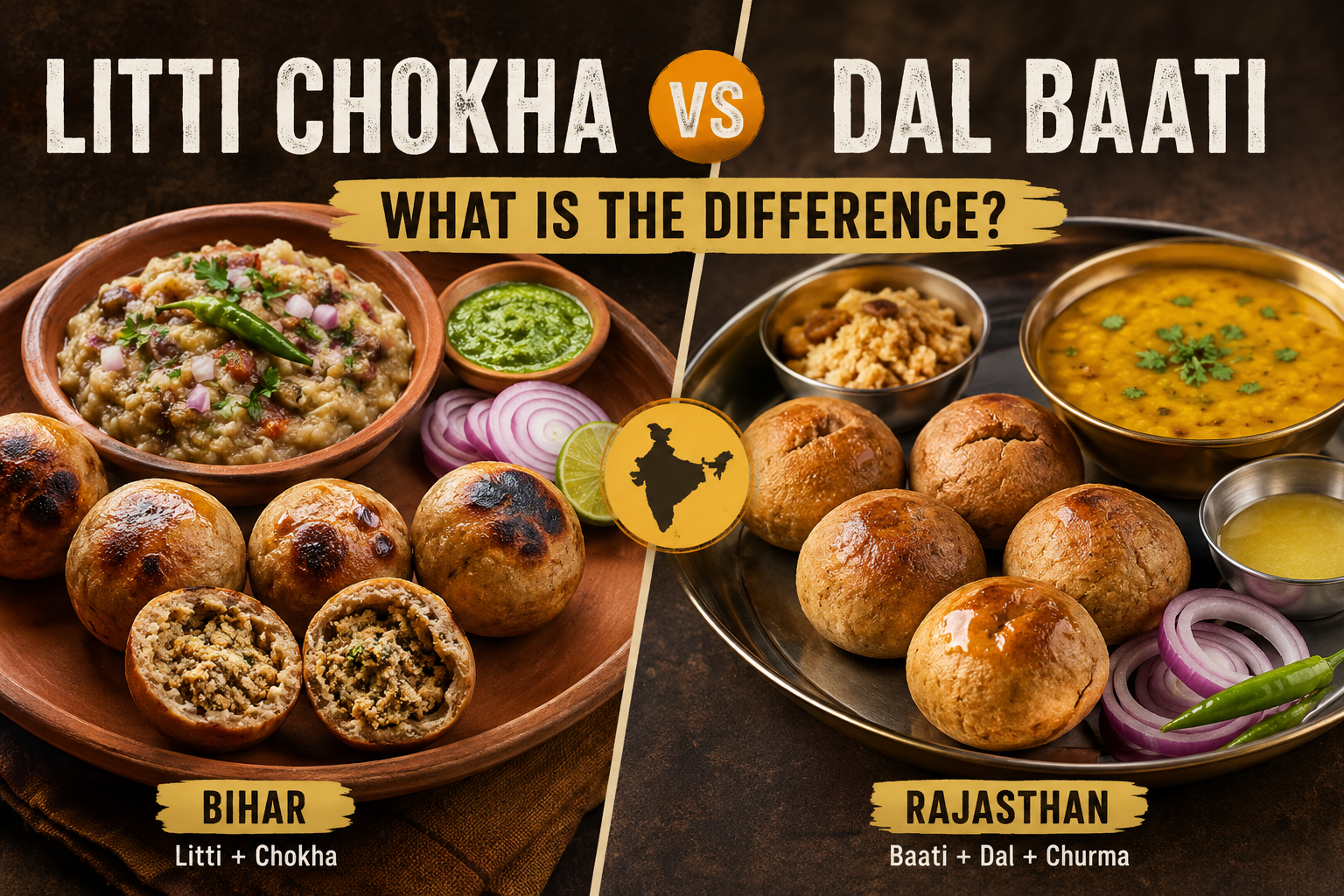
At first glance, Litti Chokha and Dal Baati can look quite similar. Both feature roasted wheat-based dough balls and are associated with traditional Indian cuisine. Both are also enjoyed with generous amounts of ghee and have a strong connection with regional food culture.
However, they are not the same dish.
Litti Chokha is strongly associated with Bihar, while Dal Baati is a popular traditional meal from Rajasthan. The main differences are the filling, accompaniments, ingredients, cooking methods, taste, and regional food traditions.
If you have ever wondered about the difference between Litti Chokha and Dal Baati, this guide will help you understand both dishes in a simple way.
Are Litti Chokha and Dal Baati the Same Dish?
No, Litti Chokha and Dal Baati are different traditional Indian dishes. Litti is generally a wheat dough ball stuffed with spiced sattu and served with chokha, while baati is generally a wheat-based dough ball served with dal and ghee. Their ingredients, preparation, accompaniments, flavours and regional identities are different.
The confusion is understandable because both dishes involve roasted wheat dough balls. But once you look at what goes inside them and what they are served with, the difference becomes clear.
Litti belongs closely to the food culture of Bihar and eastern India. Dal Baati is closely associated with Rajasthan and Rajasthani cuisine.
What Is Litti Chokha?
Litti Chokha is one of the most recognisable traditional foods associated with Bihar. It consists of roasted or baked wheat dough balls called litti, usually filled with a seasoned mixture of sattu, and served with chokha.
The combination creates a meal with smoky, spicy, earthy and tangy flavours.
Litti is the main wheat-based component, while chokha provides the vegetable-based accompaniment.
What Is Litti Made Of?
Traditional litti is generally prepared using wheat flour and a filling made from roasted gram flour, commonly known as sattu.
The sattu filling may include:
- Sattu
- Garlic
- Ginger
- Green chilli
- Ajwain
- Lemon juice
- Salt
- Spices
- Mustard oil
- Fresh coriander
The exact recipe can vary between families, regions and restaurants.
The use of sattu is one of the biggest things that separates litti from a typical baati.
Sattu gives the filling its distinctive earthy flavour and makes litti a satisfying and flavourful dish.
If you want to learn the complete preparation process, check out our detailed guide on how to make Litti Chokha at home.
What Is Chokha?
Chokha is a rustic mashed vegetable preparation traditionally served with litti.
Popular versions include:
- Baingan Chokha – roasted brinjal mashed with spices and aromatics
- Aloo Chokha – mashed potato mixed with spices, onion, chilli and other ingredients
- Tamatar Chokha – roasted or cooked tomato-based chokha
- Mixed Chokha – a combination of vegetables
Chokha usually has a smoky and rustic character, especially when the vegetables are roasted before being mashed.
The combination of hot litti, spicy sattu filling, smoky chokha and ghee creates the signature Litti Chokha experience.
How Is Litti Traditionally Cooked?
The preparation generally follows these steps:
- Wheat flour is mixed to prepare a dough.
- Sattu is seasoned with spices, herbs and other ingredients.
- Small portions of dough are filled with the sattu mixture.
- The dough is closed and shaped into balls.
- The litti is roasted or baked until properly cooked.
- It is served hot with chokha and ghee.
Traditional cooking methods can give litti a pleasant roasted aroma and slightly crisp outer layer.
What Is Dal Baati?
Dal Baati is a traditional Rajasthani meal made with baati, dal and ghee. It is one of the best-known dishes associated with Rajasthan and is also enjoyed in other parts of India.
Baati is a wheat-based dough ball that is traditionally roasted or baked. It is then served with dal and ghee.
In many traditional meals, churma is also served alongside Dal Baati.
What Is Baati Made Of?
Baati is generally made from wheat flour, along with ingredients such as:
- Wheat flour
- Ghee
- Salt
- Water
- Spices, depending on the recipe
Unlike traditional litti, baati is generally not centred around a sattu filling.
There are also different varieties of baati, including versions that may be stuffed or prepared with different ingredients. Regional and family recipes can vary.
What Is Dal in Dal Baati?
Dal provides the lentil-based component of the meal.
Panchmel dal, a preparation made using a combination of lentils, is commonly associated with traditional Dal Baati.
The dal adds a soft, savoury and spiced element to the firm roasted baati.
Ghee is another important part of the traditional serving style. It adds richness and enhances the overall flavour.
How Is Dal Baati Traditionally Served?
A traditional serving may include:
- Hot baati
- Dal
- Ghee
- Churma
- Pickles or other accompaniments
The baati may be broken into pieces and combined with dal and ghee before eating.
The result is a rich and satisfying meal with a combination of crisp, soft, creamy and sweet elements when churma is included.
Litti Chokha vs Dal Baati: Key Differences at a Glance
The easiest way to understand the Litti Chokha vs Dal Baati difference is to compare their main characteristics.
| Feature | Litti Chokha | Dal Baati |
| Regional association | Bihar | Rajasthan |
| Main component | Litti | Baati |
| Main filling | Spiced sattu | Usually no filling |
| Main accompaniment | Chokha | Dal |
| Signature ingredient | Sattu | Dal and ghee |
| Vegetable component | Chokha is central | Not the main component |
| Cooking | Traditionally roasted/baked | Traditionally roasted/baked |
| Taste | Spicy, smoky, earthy and tangy | Savoury, rich and ghee-forward |
| Common additional food | Chutney, pickle or other accompaniments | Churma is commonly associated |
| Cuisine | Bihari cuisine | Rajasthani cuisine |
This is a simplified comparison because recipes and serving styles can change from one region, family or restaurant to another.
What Is the Difference Between Litti and Baati?
The difference between litti and baati is more specific than the difference between the complete meals.
Litti and baati are both wheat-based dough balls, but their traditional preparation and serving styles are different.
Litti
- Usually contains a sattu-based filling.
- Is strongly associated with Bihar.
- Is commonly served with chokha.
- Has a spicy and earthy flavour.
- Often includes mustard oil and aromatic spices in the filling.
Baati
- Is generally made from wheat flour without a traditional sattu centre.
- Is strongly associated with Rajasthan.
- Is commonly served with dal.
- Is traditionally eaten with ghee.
- Churma is commonly served as part of the broader Dal Baati meal.
So, litti is not simply another name for baati.
They belong to different regional food traditions, even though their appearance and cooking style can be similar.
Litti Chokha vs Dal Baati: Difference in Ingredients
Ingredients are one of the easiest ways to understand the difference.
Litti Chokha Ingredients
The main ingredients generally include:
- Wheat flour
- Sattu
- Mustard oil
- Garlic
- Ginger
- Green chilli
- Ajwain
- Lemon
- Salt
- Spices
- Vegetables for chokha
The sattu filling is particularly important.
It gives litti its distinctive texture and flavour.
Dal Baati Ingredients
Dal Baati generally uses:
- Wheat flour
- Ghee
- Lentils
- Salt
- Spices
- Water
- Additional ingredients for dal
- Ingredients for churma, where served
The key difference is easy to remember:
Litti gets much of its identity from the sattu filling, while Dal Baati gets its identity from the combination of baati, dal and ghee.
Litti Chokha vs Dal Baati: Taste and Texture
Taste is another major difference between these two dishes.
How Does Litti Chokha Taste?
Litti Chokha can offer several flavours in one meal.
The litti itself can have the following:
- Earthy sattu flavour
- Spicy seasoning
- Roasted aroma
- Slightly crisp exterior
- Soft or crumbly filling
Chokha adds smoky, tangy and spicy notes.
Mustard oil, garlic, green chilli and roasted vegetables can make the dish particularly aromatic.
How Does Dal Baati Taste?
Dal Baati is known for a rich and satisfying flavour.
The baati can have:
- A roasted wheat flavour
- Firm or crisp outer texture
- Soft interior
- Rich ghee notes
The dal adds moisture and savoury flavour.
When churma is included, the meal gets a sweet element that contrasts with the savoury dal and baati.
Which Has More Smoky Flavour?
Both dishes can have roasted flavours, but the experience is different.
Litti Chokha often has a more noticeable smoky and spicy character, especially because of roasted litti and vegetables used for chokha.
Dal Baati generally focuses more on roasted wheat, dal and the richness of ghee.
Litti Chokha vs Dal Baati: Cooking Method
Both dishes use roasting or baking techniques, but the complete preparation is different.
How Is Litti Cooked?
Litti is shaped around its sattu filling and then roasted or baked.
The cooking process allows the outer wheat layer to develop a roasted flavour while the filling remains aromatic and crumbly.
Traditional roasting can add a distinct smoky character.
How Is Baati Cooked?
Baati is shaped from wheat-based dough and roasted or baked until cooked.
The outer surface can become firm or crisp while the inside remains softer.
It is then commonly served with ghee and dal.
The cooking method can vary according to the region and kitchen setup. Modern restaurants may use ovens or other controlled cooking equipment, while traditional methods use direct heat.
Bihar vs Rajasthan Food: Why Are These Dishes Different?
Food traditions develop from local ingredients, cooking practices, climate, geography and cultural influences.
That is one reason why Litti Chokha and Dal Baati, despite looking similar, have different identities.
Litti Chokha and Bihar’s Food Culture
Litti Chokha is closely linked with Bihar’s traditional food culture.
The use of sattu is particularly important. Sattu is a versatile ingredient used in several preparations across eastern and northern India.
Bihari cuisine also makes strong use of ingredients such as:
- Mustard oil
- Garlic
- Green chilli
- Local vegetables
- Wheat
- Lentils
- Roasted ingredients
Litti Chokha brings many of these flavours together in one meal.
The roasted litti and vegetable-based chokha create a rustic combination that is easy to recognise.
Dal Baati and Rajasthan’s Food Culture
Dal Baati is strongly connected with Rajasthan’s culinary identity.
Wheat-based baati, lentils and ghee form the core of the traditional combination.
Rajasthani cuisine is known for a wide variety of dishes that use grains, pulses, spices and preserved ingredients.
Dal Baati represents this food culture through a simple but filling combination of roasted wheat, lentils and ghee.
Is Litti Chokha Healthier Than Dal Baati?
There is no simple answer to whether Litti Chokha is healthier than Dal Baati.
The nutritional profile of either meal depends on:
- Portion size
- Amount of ghee used
- Amount of oil used
- Ingredients
- Cooking method
- Quantity of vegetables
- Individual dietary requirements
Litti contains sattu, which contributes plant-based protein and other nutrients. Chokha can also add vegetables to the meal.
Dal Baati provides lentils, which are also an important source of plant-based protein and other nutrients.
However, both dishes can become calorie-dense when large amounts of ghee or oil are added.
For a balanced meal, portion size and the overall diet matter more than simply labelling one dish as healthy and the other as unhealthy.
Expert insight: Nutritional value can vary significantly depending on the recipe, preparation method and serving size.
Which Is More Filling: Litti Chokha or Dal Baati?
Both can be very filling.
Litti combines wheat with a sattu filling, while dal baati combines wheat-based baati with dal and ghee.
The amount you eat, the size of the serving and the quantity of accompaniments all affect how filling the meal feels.
If you enjoy a meal with a stuffed wheat component and vegetables, Litti Chokha can be a satisfying choice.
If you prefer wheat, lentils and ghee, Dal Baati offers a different kind of hearty meal.
Litti Chokha vs Dal Baati: Which One Should You Try?
The answer depends on your taste.
Choose Litti Chokha if you like the following:
- Sattu
- Spicy food
- Smoky flavours
- Roasted vegetables
- Mustard oil
- Rustic Bihari cuisine
- Chokha
Choose Dal Baati if you like the following:
- Dal
- Wheat-based dishes
- Ghee-rich flavours
- Rajasthani cuisine
- Savoury traditional meals
- Churma
If you enjoy regional Indian food, trying both is the best way to understand the difference.
They may share a similar roasted appearance, but their flavours and culinary identities are quite different.
Can You Find Litti Chokha and Dal Baati in Indian Restaurants?
Regional Indian food has become popular far beyond the states where individual dishes originated.
In cities such as Patna, traditional Bihari dishes are a popular choice for people who want familiar regional flavours as well as visitors who want to explore local cuisine.
If you are in Patna and want to enjoy the flavours of Bihar, Baati Chokha Family Restaurant can be a convenient place to experience a traditional litti-based meal with family and friends.
The combination of roasted litti, flavourful chokha and traditional accompaniments offers a simple way to explore the food culture of Bihar.
Want to try Bihar’s famous regional flavours? Plan a visit to Baati Chokha Family Restaurant, Patna, and enjoy Litti Chokha with family and friends.
Key Takeaways: Litti Chokha vs Dal Baati
Here are the main differences to remember:
- Litti Chokha is strongly associated with Bihar, while Dal Baati is strongly associated with Rajasthan.
- Litti is generally stuffed with spiced sattu.
- Baati is generally a wheat-based dough ball without a traditional sattu filling.
- Litti is commonly served with chokha.
- Baati is traditionally served with dal and ghee.
- Churma is commonly associated with the Dal Baati meal.
- Litti Chokha tends to offer smoky, spicy and earthy flavours.
- Dal Baati offers roasted wheat flavours with savoury dal and rich ghee.
- Both dishes represent the diverse regional food traditions of India.
Frequently Asked Questions About Litti Chokha vs Dal Baati
Is Litti Chokha the same as Dal Baati?
No. Litti Chokha and Dal Baati are different regional dishes. Litti is generally stuffed with spiced sattu and served with chokha, while baati is generally served with dal and ghee. Litti Chokha is strongly associated with Bihar, while Dal Baati is strongly associated with Rajasthan.
Is litti the same as baati?
No. Litti and baati are both wheat-based roasted dough balls, but they are prepared differently. Litti is usually stuffed with a seasoned sattu mixture, while baati is generally unstuffed. Litti is commonly served with chokha, whereas baati is commonly served with dal and ghee.
What is the main difference between Litti Chokha and Dal Baati?
The main difference is their filling and accompaniment. Litti usually contains a spicy sattu filling and is served with chokha. Baati is generally made from wheat dough and served with dal and ghee. Their regional food traditions are also different.
Which state is famous for Litti Chokha?
Bihar is particularly famous for Litti Chokha. The dish is an important part of Bihari food culture and is widely enjoyed in Patna and other parts of the state. It is also popular in neighbouring regions and across India.
Which state is famous for Dal Baati?
Rajasthan is particularly famous for Dal Baati. The dish is an important part of Rajasthani cuisine and is commonly served with ghee. Churma is also frequently included as part of the traditional meal.
What is inside a litti?
Litti is usually filled with a seasoned mixture of sattu, garlic, ginger, green chilli, ajwain, lemon juice, salt, spices and mustard oil. Recipes can vary depending on the region, family and restaurant.
What is served with litti?
Litti is traditionally served with chokha, which may be prepared using roasted brinjal, potato, tomato or a combination of vegetables. Ghee, chutney and pickle may also be served depending on the meal and recipe.
What is served with baati?
Baati is commonly served with dal and ghee. Panchmel dal is traditionally associated with Dal Baati, while churma is also commonly served as part of the meal. Additional accompaniments can vary by region and restaurant.
Is Litti Chokha healthier than Dal Baati?
Neither dish can automatically be considered healthier. The nutritional value depends on ingredients, portion size, cooking method and the amount of ghee or oil used. Litti provides sattu and vegetables through chokha, while Dal Baati provides lentils through dal.
Which tastes better, Litti Chokha or Dal Baati?
Taste is a personal preference. Litti Chokha is a good choice for people who enjoy spicy, smoky and earthy flavours with sattu and roasted vegetables. Dal Baati may appeal more to people who enjoy roasted wheat, dal and rich ghee-based flavours.