India is famous for its rich culture, colorful festivals, and unforgettable food. Every region has its own cooking style, spices, and traditional recipes. That is why the traditional food of Indian states feels different in every corner of the country.
From spicy curries in the South to smoky litti in Bihar, Indian cuisine offers endless flavors. Food is not only about taste in India. It also reflects history, family traditions, climate, and local farming practices.
Many travelers explore India through its food. Some people visit famous restaurants, while others enjoy homemade meals in villages and small towns. In cities like Patna, places such as Baati Chokha have become popular for serving authentic Bihari dishes in a traditional style.
According to reports by the Indian food service industry, regional cuisine searches have increased by more than 40% in recent years. People now want authentic experiences instead of fast food. That trend has made traditional Indian food more popular than ever.
What Makes Traditional Indian Food Special?
Traditional Indian food stands out because it uses local ingredients and regional cooking methods. Every state prepares food based on weather conditions, farming patterns, and cultural influences.
For example:
- Coastal states use more seafood and coconut
- Northern states prefer wheat-based dishes
- Eastern India focuses on rice and mustard flavors
- Desert regions use preserved foods and dry spices
This diversity creates one of the world’s largest varieties of regional cuisine.
Another reason behind the popularity of traditional food of Indian states is emotional connection. Many Indians associate food with family gatherings, weddings, and festivals. A single dish often carries memories from childhood.
Why Traditional Indian Food Is Popular Worldwide
Indian food has gained global recognition because of its balanced flavors and spice combinations. Restaurants serving Indian cuisine now operate in almost every major country.
Benefits of Traditional Indian Food
- Uses fresh spices and herbs
- Includes balanced meal combinations
- Offers vegetarian and non-vegetarian options
- Contains protein-rich lentils and grains
- Supports seasonal eating habits
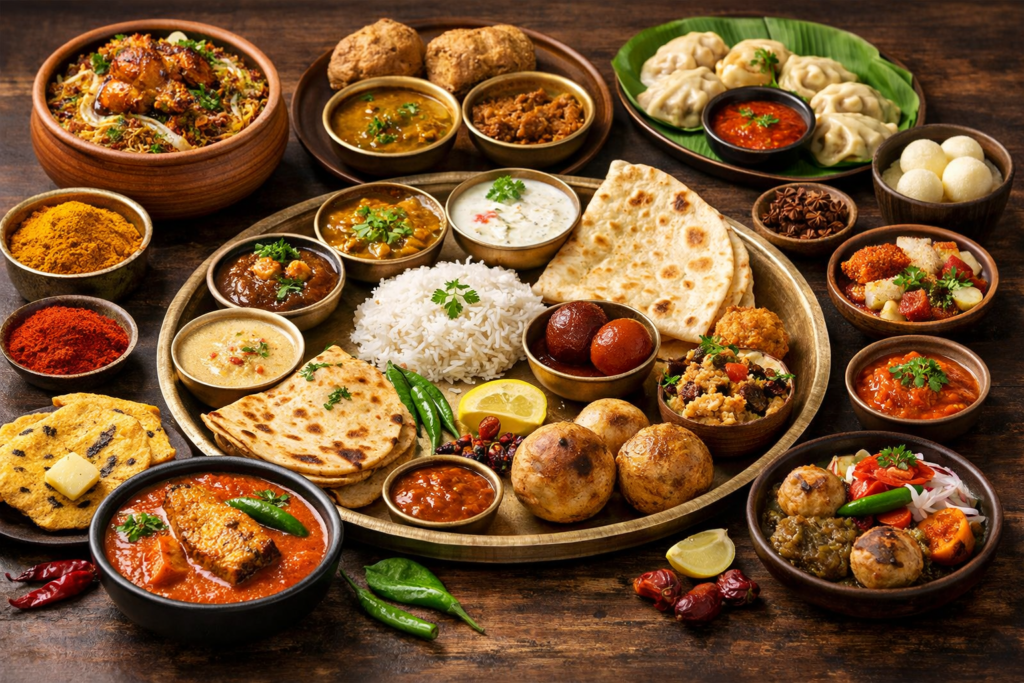
Traditional Indian food thali meals also provide nutritional balance. Most thalis include rice, roti, vegetables, lentils, curd, and pickles. This combination gives carbohydrates, proteins, fiber, and healthy fats in one meal.
Traditional Food of North Indian States
North India is famous for rich gravies, wheat breads, and dairy-based dishes. The food often includes ghee, butter, and aromatic spices.
Punjab
Punjab is known for Sarson Ka Saag and Makki Ki Roti. These dishes become especially popular during winter. Punjabi food also includes butter chicken, lassi, and chole bhature.
Rajasthan
Dal Baati Churma is one of the most famous dishes from Rajasthan. The food here developed according to desert conditions. Many recipes use dry ingredients and long shelf-life cooking methods.
Uttar Pradesh
Tunday Kabab, Bedmi Puri, and Petha are traditional favorites. Lucknow’s Awadhi cuisine is famous for slow-cooked meat dishes and royal flavors.
Bihar
Litti Chokha represents Bihar’s traditional food culture. Roasted wheat balls filled with sattu are served with mashed vegetables and chutney. Travelers looking for authentic taste often visit Baati Chokha for traditional Bihari meals.
Himachal Pradesh
Dham is a festive meal served during special occasions. It includes rice, lentils, curd-based dishes, and sweet preparations.
Traditional Food of South Indian States
South Indian cuisine uses rice, curry leaves, coconut, tamarind, and spices. The food is lighter but full of flavor.
Tamil Nadu
Pongal, Chettinad Curry, and Dosa are popular dishes. Chettinad recipes are especially known for strong spice combinations and roasted masalas.
Kerala
Kerala cuisine includes Appam and Vegetable Stew. Seafood dishes are also common because of the coastal location. Coconut oil plays a major role in cooking.
Karnataka
Bisi Bele Bath combines rice, lentils, vegetables, and spices in one comforting meal. Mysore Pak is another famous traditional sweet.
Andhra Pradesh and Telangana
Hyderabadi Biryani and Gongura Pachadi are regional favorites. Andhra cuisine is known for spicy food and tangy chutneys.
Traditional Food of East Indian States
Eastern India offers rice-based dishes with subtle spice levels and unique cooking methods.
West Bengal
Macher Jhol and Rasgulla define Bengali cuisine. Fish and sweets hold a special place in Bengali households.
Odisha
Dalma and Pakhala Bhata are simple yet nutritious dishes. Pakhala becomes especially popular during summer because it helps cool the body.
Assam
Masor Tenga is a sour fish curry made with tomatoes and local herbs. Assamese food usually avoids heavy spices.
Jharkhand
Dhuska is a crispy rice and lentil dish commonly eaten with spicy curry or chutney.
Traditional Food of West Indian States
West Indian cuisine balances sweet, spicy, and tangy flavors.
Gujarat
Dhokla and Undhiyu are famous Gujarati dishes. Gujarati thali meals include multiple small portions with balanced flavors.
Maharashtra
Misal Pav and Puran Poli are widely loved across the state. Street food culture also plays a huge role in Maharashtra.
Goa
Goan Fish Curry combines seafood with coconut and local spices. Portuguese influence can also be seen in Goan cuisine.
Traditional Food of North-East Indian States
North-East India offers some of the most unique flavors in the country.
Sikkim
Momos and Thukpa are popular comfort foods. These dishes are influenced by Tibetan cooking traditions.
Nagaland
Smoked Pork with Bamboo Shoot is one of Nagaland’s signature dishes. Fermented ingredients are common in the region.
Meghalaya
Jadoh is a rice-based dish prepared with meat and spices. Local herbs give it a distinct flavor.
What Is a Traditional Indian Food Thali?
A traditional Indian food thali is a complete meal served on one plate. Different states prepare thalis in their own style.
Common Items in a Traditional Indian Food Thali
- Rice
- Roti or naan
- Dal
- Seasonal vegetables
- Pickle
- Papad
- Sweet dish
- Curd
Thalis help people experience multiple flavors together. They also represent the hospitality culture of India.
How Traditional Food Reflects Indian Culture
Food connects directly with Indian traditions and celebrations. Festivals often have specific recipes prepared only during certain seasons.
For example:
- Gujiya during Holi
- Modak during Ganesh Chaturthi
- Pitha during Makar Sankranti
- Sewai during Eid
Traditional recipes also pass from one generation to another. Many families still cook using handwritten recipes from grandparents.
Signs of Authentic Traditional Indian Food
Many restaurants use the word “traditional,” but authentic food has certain qualities.
Signs to Look For
- Use of local spices
- Seasonal ingredients
- Handmade cooking methods
- Regional serving style
- Traditional utensils or presentation
Restaurants like Baati Chokha focus on authentic preparation methods. That creates a more genuine food experience for visitors.
Benefits of Exploring Regional Indian Cuisine
Trying the traditional food of Indian states helps people understand India beyond tourist attractions.
Key Benefits
- Learn regional culture
- Discover forgotten recipes
- Support local businesses
- Experience healthier homemade meals
- Understand local farming traditions
Food tourism is also growing rapidly in India. Many travelers now plan trips around famous regional dishes.
How to Enjoy Traditional Food While Traveling
Exploring regional cuisine becomes easier when travelers follow simple steps.
Useful Tips
- Try local thalis first
- Visit family-style restaurants
- Ask locals for recommendations
- Eat seasonal dishes
- Explore street food carefully
People visiting Bihar often search for authentic litti chokha experiences. Popular places like Baati Chokha attract both tourists and local food lovers.
Indian Traditional Food List You Must Try
Here are some famous dishes from different regions:
| State | Traditional Dish |
| Punjab | Sarson Ka Saag |
| Rajasthan | Dal Baati Churma |
| Bihar | Litti Chokha |
| Gujarat | Dhokla |
| West Bengal | Macher Jhol |
| Kerala | Appam and Stew |
| Telangana | Hyderabadi Biryani |
| Assam | Masor Tenga |
| Sikkim | Momos |
This traditional food of Indian states with name list gives a quick overview of India’s rich food diversity.
Why Families Still Prefer Traditional Indian Food
Modern fast food is easily available today. Still, many families continue to prefer homemade traditional meals.
Traditional recipes often create emotional comfort. Families gather together during festivals and celebrations around food. Grandparents also pass cooking traditions to younger generations.
This emotional connection keeps Indian traditional food alive even in modern cities.
Conclusion
The traditional food of Indian states tells the story of India’s culture, geography, and family traditions. Every dish reflects local ingredients, seasonal habits, and regional history.
From spicy biryani in Hyderabad to litti chokha in Bihar, India offers endless food experiences. Travelers and food lovers continue to explore these regional flavors for authentic taste and cultural connection.
Restaurants such as Baati Chokha also help preserve local cuisine by serving authentic regional dishes in a traditional setting.
If you truly want to understand India, start with its food. Every plate carries a story.
FAQ Section
What is the traditional food of Indian states?
Traditional food of Indian states refers to regional dishes prepared using local ingredients, spices, and traditional cooking methods unique to each state.
Which state has the best traditional food in India?
Every state has its own specialty. Punjab, Rajasthan, Kerala, Bihar, and West Bengal are especially famous for their regional cuisine.
What is included in a traditional Indian food thali?
A traditional Indian food thali usually includes rice, roti, dal, vegetables, curd, pickle, and dessert served together.
Why is Indian traditional food so diverse?
India has different climates, cultures, languages, and farming patterns. These differences create unique food traditions in every state.
Which traditional food is famous in Bihar?
Litti Chokha is one of Bihar’s most famous traditional dishes. Many visitors try it at Baati Chokha in Patna.
What are the benefits of traditional Indian food?
Traditional Indian food often includes balanced nutrition, seasonal ingredients, natural spices, and homemade cooking methods.